
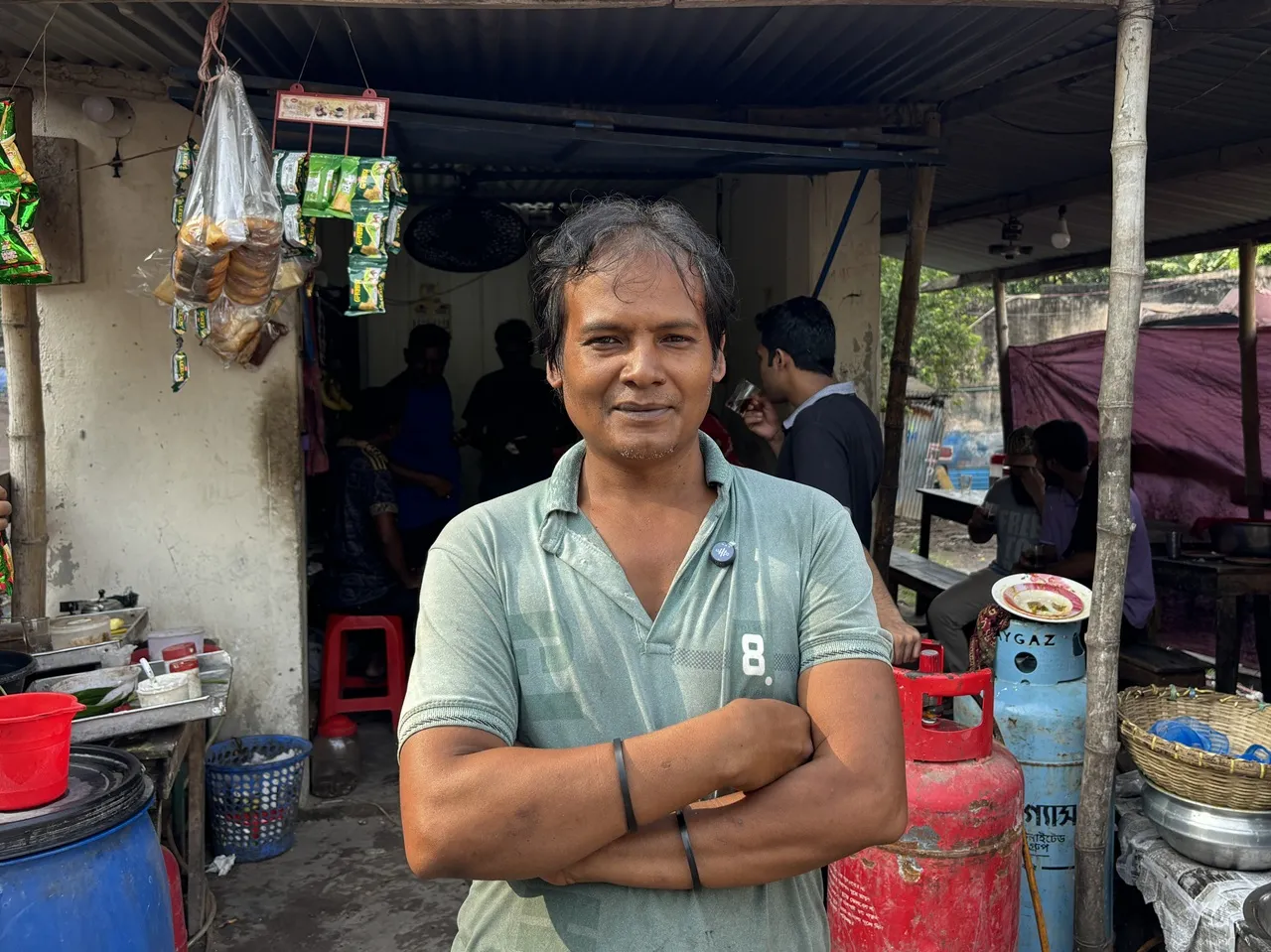
Idris arrived in Dhaka from his village. He brought his wife and three sons. He had nothing else. For one year, he worked in someone else's shop. His wife cleaned homes to help the family survive. Their sons could not go to school. Then SSD came forward. Slowly, everything began to change. This is the story of one family. A quiet climb. A determined climb.
Idris came to Dhaka with his wife and three sons. He had no job waiting. No relatives to stay with. No savings to fall back on. He only had a family that trusted him. And a quiet promise inside him that things would get better. Somehow. Someday. If he just kept going.
The First Year
The first year in Dhaka was very hard. Only people who have lived it can truly understand.
Idris found work at someone else's shop. He showed up every day. He put in the hours. He earned just enough to cover rent and food. His wife cleaned other people's homes. She left early and came back tired. Together, they kept the family above water. But only just.
Through that whole year, one thing stayed with Idris. It pressed on him the most. His sons. Three boys who should have been in school. Three boys who instead watched their parents work themselves to exhaustion. In a city that had not yet made room for them.
Their education had stopped the day the family left the village.
A Decision to Change Things
Idris did not want to spend another year the same way. He had seen how the city worked. He understood trade. He knew that if he could get a shop of his own — even a small one — he could build something real.
He came to SSD.
Through SSD's microfinance program, Idris and his wife took a combined loan of sixty thousand taka. They used two accounts. It was not a fortune. But it was exactly what they needed to take the first real step.
He rented a shop. He set it up. He opened for business. This time, he worked for himself.
What Changed — and What It Means
The changes that followed were not dramatic. No big announcements. They were quiet. Steady. The kind of changes that only a family can feel from the inside.
His wife no longer works in other people's homes. She is back in her own. She manages the household. She is present for her children. She is no longer stretched thin between two demands. That shift alone means something that money cannot measure.
And his sons — the three boys whose schooling had stopped — are now in college.
Let that sink in. Three sons. College. Just a year earlier, they were out of school completely. They watched their parents survive day by day in an unfamiliar city. Today, they are studying. They are building something for themselves. Their path ahead looks different now.
A Father Who Kept His Word
Idris came to Dhaka with a promise to his family. Not one he said out loud. It was the kind a father carries silently. That things would be better. That the move was worth it. That the hard days would not last forever.
He kept that promise.
Not through luck. Not through a windfall. He did it through one year of working in someone else's shop. One decision to reach out for help. One loan used with care. And years of steady work after that. The shop is his now. The income is steady. His family is stable.
What SSD Did — and What We Did Not Do
SSD did not rescue Idris. That is important to say. Idris came with his own strength. His own plan. His own willingness to take a risk. SSD just gave him access. Access to money he could not get otherwise. We treated him with dignity. We gave him room to grow at his own pace.
That is what good microfinance looks like. Not a handout. A hand extended to someone who is already reaching.
There are many families like Idris's. People who arrive in a new place with nothing. They work hard. They ask for very little. They just need one real chance to change the direction of their lives. SSD exists to give that chance.
Idris is one of many who have received support from SSD's microfinance program. His story shows how a small loan, given with respect, can change a family's future. SSD continues to serve families like his across the communities we work in.